Unknown's avatar

About gfiworld

This site is edited by John Woodward M.Div., D.Min, who serves as Director of Counseling and Training at Grace Fellowship International in Pigeon Forge, TN

Spiritual Leadership

Miles Stanford, the author of Principles of Spiritual Growth, noted that “To be a leader one must be a dependent one, a led one; one who is “looking away (from all that would distract) to Jesus, who is the Leader and the Source of our faith” (Heb. 12:2).

J. Oswald Sanders addressed the need for spiritual, sacrificial leadership: “One of the greatest needs in the Church today is for authoritative, spiritual, and sacrificial leadership. Authoritative, because people love to be led by one who knows where he is going and who inspires their confidence. Spiritual, because a leadership which is carnal and explainable in terms of the natural, be it ever so competent, can result in sterility and spiritual bankruptcy. Sacrificial, because its source is the life of One who gave Himself a sacrifice, and stated that the path of leadership was by the lonely road of sacrificial service.” – Spiritual Leadership: Principles of Excellence for Every Believer

T. Austin-Sparks gave this encouragement to those who deal with loneliness in the context of their role: “The standard and measure of spiritual leaders has to be ahead of others, and as human nature generally likes not to be disturbed, but would seek the easy way, the pioneer is often a bit too much for people. His is not the easy way, and because the whole nature of man is either downward or to a quiet and happy snugness, the leader is not always popular. The pioneer is therefore not always appreciated, but often very much otherwise. He is quite contrary to this mediocre gravitation. A part of the price of leadership is loneliness. Paul could say, ‘I am glad to spend and to be spent for your sakes, notwithstanding the more earnestly I love you the less I be loved’; not, I will help you as long as you love me. People hurt you; you are not appreciated? Well, so be it! Spend and be spent the more!”

“Therefore if there is any encouragement and comfort in Christ [as there certainly is in abundance], if there is any consolation of love, if there is any fellowship [that we share] in the Spirit, if [there is] any [great depth of] affection and compassion,  make my joy complete by being of the same mind, having the same [ove [toward one another], knit together in spirit, intent on one purpose [and living a life that reflects your faith and spreads the gospel—the good news regarding salvation through faith in Christ].  Do nothing from selfishness or empty conceit [through factional motives, or strife], but with [an attitude of] humility [being neither arrogant nor self-righteous], regard others as more important than yourselves.  Do not merely look out for your own personal interests, but also for the interests of others.  Have this same attitude in yourselves which was in Christ Jesus [look to Him as your example in selfless humility]… -Phil. 2:1-5 Amplified Bible.

New Year’s Renewal

Screenshot

I met Bill and Kristi Gaultiere at their ministry exhibit in Nashville, Tennessee last year. Their ministry, Soul Shepherding, provides spiritual direction events and resources. Here is Bill’s article advising New Year’s renewal rather than “resolutions.”

____________

Have you ever made (and kept) a New Year’s resolution?

It’s safe to say most of us have been tossed around by the stereotypical cycle of trying hard to grow — optimism, striving, fizzling out, becoming discouraged, and giving up.

Usually, our resolutions — even spiritual ones — end in failure by mid-February! It leaves us wondering: Is real change even possible?

It’s refreshing to know that true transformation in Christlikeness cannot be accomplished without Christ! Becoming healthy and whole in our apprenticeship to him only happens by partnering with grace (Ephesians 2:8-10, Philippians 2:13).

Instead of being rigidly resolute you can learn to experience renewal with Christ each year. I call this a “New Year’s renewal.”

What’s the difference between a resolution and renewal? Resolutions are about straining, while renewals are about training with Jesus inside his easy yoke (Matthew 11:28-30).

A New Year’s renewal always centers around one thing — better yet, the One Thing. It overflows from a desire to be devoted to Christ with your entire being (Matthew 22:37-40).

  • It’s requesting with David, amid frightening trials and longsuffering, to dwell in the house of the Lord above everything else (Psalm 27:4).
  • It’s setting aside all distractions with Mary for the one thing that really matters — adoring and worshiping Jesus (Luke 10:41-42).
  • It’s disregarding all achievements with Paul to discover the one thing, knowing Christ, that surpasses even other noteworthy ambitions (Philippians 3:7-10).

Posturing your heart in this way prepares you for renewal. Then you can ask the Lord about the work he wants to do in your life and how you can partner with him to become like him.

As you wait on the Lord, he’ll show you an obstacle (like a place of hurt, need for soul care, unhelpful habit, etc.) that needs to change so you can become more centered on Christ as your One Thing.

But how can you make authentic changes in your life? The vision to express love for God from a pure heart, overcome worry or anger, rejoice in trials, or pray without ceasing sounds incredible. But it’s also challenging. Even impossible!

Real character change — learning, growing, or healing — happens through training with Jesus to encounter his transformational love and power.

What does this look like? A helpful starting place is to practice grace-filled spiritual disciplines to create a meeting space for you and the Good Shepherd. Here, you can look to Jesus as your Coach and “work out” with him. This is what Paul means when he advises, “Train yourself to be godly” (1 Timothy 4:7).

You could start this year with the spiritual training program of Scripture meditation. Scripture meditation is not simply reading or studying the Bible. It’s approaching God’s Word slowly and prayerfully — letting the words sink from your head to your heart by the power of the Spirit.

You can ask God to draw you to verses that specifically apply to the obstacle in your life that keeps you from more deeply experiencing him as the One Thing. They will become the medicine to your soul and vitamins to your life in Christ. As you digest them (over days, weeks, or even months), you will discover healing and growth.

There are also other things you can do to set aside distractions and focus on the One Thing. You might consider starting your year by joining us for a 5-day Institute retreat to set aside everything else and learn how to flourish with Jesus. Talking to a spiritual director is also a powerful way to find help discerning Jesus’ movement in your heart, so you can follow his lead and grow closer to him.

Praying you fall madly in love with the Only One Who Matters this year.


https://www.soulshepherding.org/

Joseph Carroll: Christ Our Life

JOSEPH S. CARROLL authored the book, How to Worship Jesus Christ (Moody Publishers, 1984). This publisher notes that he was the founder of the Evangelical Institute of Greenville South Carolina and served as Pastor and Senior Elder at the First Evangelical Church in Greenville. He traveled extensively throughout the Far East speaking to mission societies. In addition, he served as Pastor at the Tokyo Evangelical Church.

In this sermon Carroll expounds on what it means know Jesus Christ as your Life. He contends that identification with Christ is seldom understood and appropriated. Scriptures quoted include Colossians 1:27;3:1-4; Galatians 2:20; John 15:5 and Philippians 3:1-9. At minute 32 he refers to the testimony of Charles Trumbull, “The Life That Wins.” We are exhorted to wholehearted yielding to God’s will and radical belief in our union with Christ, trusting in Him to live in us and through us.

The Holy Spirit in Ministry and Transformation

by pastor Joe Humrichous

“‘Not by might nor by power, but by My Spirit,’ Says the Lord of hosts.” (Zech 4:6b)

Joe Humrichous is the author of The Vine and The Church and leads Paradigm 1. The purpose of his ministry is “to encourage and equip pastors, churches and families to practice leadership and united prayer under the active headship of Christ (Matthew 16:18). This paradigm assumes the philosophy that only what is done under Christ’s authority will bring glory to God (Matthew 28:18).”

The video above introduces his article on “The Holy Spirit in Ministry and Transformation,” Here he writes:

“How many times as a vineyard worker have you been discouraged because of the seeming lack of growth in the professing branches to whom you minister? We long for repentance, growth, and change. We work to improve our messages, both in delivery and content. We explore possibilities of some new ministry functions and seek advice from others in what they may be doing. Honestly, sometimes we just flat out worry, are discouraged, and complain!

“This chapter is to remind us of the most excellent character, presence, and authoritative power of God the Holy Spirit. He is the Spirit of Christ with us and within us that changes lives. We are not orphans, and in all our weakness and fear, we can experience the demonstration of the Spirit and power so that the whole congregation’s faith should not be in the wisdom of men but the power of God (I Corinthians 2:4,5). Our speech and preaching may be persuasive and humanly excellent, but without the Holy Spirit, lives are only moved but not changed. How powerful when the “lunch” of a well-prepared message is placed in the hands of the Holy Spirit who then breaks it, blesses it, and feeds the multitude. It’s the best of both worlds.”

The author then lists 35 activities of the Holy Spirit, with biblical references. This is followed by a longer list of testimonial observations.

The apostle Paul credited New Testament transformation to the ministry of the Holy Spirit: “But we all, with unveiled face, beholding as in a mirror the glory of the Lord, are being transformed into the same image from glory to glory, just as by the Spirit of the Lord” (2 Cor. 3:18).

Read the full article here: www.paradigm1.org/blog/the-holy-spirit-and-transformation/

Dignity and Responsibility: Grace and Truth

“O Lord, our Lord,
how majestic is your name in all the earth!
You have set your glory above the heavens.
Out of the mouth of babies and infants,
you have established strength because of your foes,
to still the enemy and the avenger.
When I look at your heavens, the work of your fingers,
the moon and the stars, which you have set in place,
what is man that you are mindful of him,
and the son of man that you care for him?
Yet you have made him a little lower than the heavenly beings[b]
and crowned him with glory and honor.
You have given him dominion over the works of your hands;
you have put all things under his feet,
all sheep and oxen,
and also the beasts of the field,
the birds of the heavens, and the fish of the sea,
whatever passes along the paths of the seas.
O Lord, our Lord,
how majestic is your name in all the earth!” (Psalm 8, ESV)

This Psalm is a wonderful devotional meditation on Genesis chapters 1-2.

When a sermon is given on a passage like this, the allusions to Genesis should be brought out along with practical applications about the dignity and responsibilities of men and women made in God’s image. Although this image was marred at the Fall, we still have this dignity and— through sanctification—the restoration process continues (Col. 3:10).

But the Christian exposition of this passage would be incomplete unless there was a recognition of quotations in the New Testament (Psalm 8:2 / Matt. 21:16; Psalm 2:4-6 /Heb. 2:6-8). A resource that usually brings out the New Testament fulfillment of Old Testament passages is the notes of the Grace and Truth Study Bible (Zondervan, 2022). “Rich passage-by-passage study notes are theologically sound, guiding you to a deep understanding of each text, while always keeping in view the transformative affirmation and goodness of God’s nature and redemptive plan.” These notes are also featured in the BibleGateway.com “plus” plan. Here is a sample of the study notes:

Psalm 8:5–8 ” to rule his world and harness its potential (Ge 1:28). Every human being has inherent dignity, value, and purpose as God’s image-bearer (Ge 1:26–27). Our spiritual, rational, and relational capacities enable us to function as God’s representatives on earth. We are like ancient royal statues dotting the planet, portraying the local reign of a global king. The comprehensive list of land and sea creatures reflects the dominion assigned to human beings at creation (Ps 8:7–8; Ge 1:20–28). In the New Testament, the resurrected Lord Jesus Christ is the first man of the new creation. God is putting everything under Jesus’ feet, as he is the new Adam and the victorious Lord of all (Ps 110:1; 1Co 15:25–27; Eph 1:22). The author of Hebrews interprets Psalm 8 through the matrix of Christ’s incarnation, crucifixion, and resurrected reign. In his incarnation, Jesus was made lower than the angels. Through his crucifixion, he earned a crown of glory and honor. In his resurrected reign, which is inaugurated but not yet consummated, God will put all things under his feet (Heb 2:5–9).”

Pastors would find this Grace and Truth Study Bible to be a helpful expository example and sermon preparation resource.

Stephen Olford’s Example of Expository Biblical Preaching

Olford Ministries International makes available many helpful resources for pastors, including exemplary sermons by Dr. Stephen Olford. Their Time for Truth YouTube channel has this description:


Transform Your Ministry. The Anointed Expository Preaching and Teaching Method is a valuable resource for anyone who wants to preach and teach from the Bible with authority.Dr. Stephen Olford teaches you how to preach with authority and deliver sermons that will transform your church. His expository teaching methodology is designed to help you increase your knowledge of the Bible and equip you to preach effectively. If you’re looking to preach with authority and reach your congregation, then this video, and others in the series, is for you!

“I believe that the expository preaching of God’s infallible Word in the power of the Holy Spirit, concerning Jesus Christ as Savior and Lord, is the ultimate hope for humanity’s deepest need, church-wide renewal, national righteousness, and social justice in the world!” — Stephen Olford

Expository Preaching Sermons from the Bible for Christians.

EXPOSITORY PREACHING is the Spirit-empowered explanation and proclamation of the text of God’s Word, with due regard to the historical, contextual, grammatical, and doctrinal significance of the given passage, with the specific object of invoking a Christ-transforming response.

This Time for Truth from God’s Word YouTube channel contains replays from Dr. Stephen Olford’s radio broadcasts between 1973 and 1985.Alongside his preaching ministry, Dr. Stephen Olford gave himself to developing resources and conducting institutes on the subject of expository preaching across America and around the world.Since 2004, when Dr. Stephen Olford Olford went to be with the Lord, Olford Ministries International has continued to encourage and equip God’s servants to “rightly divide the Word of truth” in the power of the Holy Spirit.

For more information, go to https://www.olford.org/

You can get free access to the Dr. Stephen Olford Online Legacy Collection and get access to hundreds of his sermon notes and video training on expository preaching.


Here is an expository message on 2 Timothy chapter 2. It presents strategy as well as teaching.

Living in Victory: Book Review

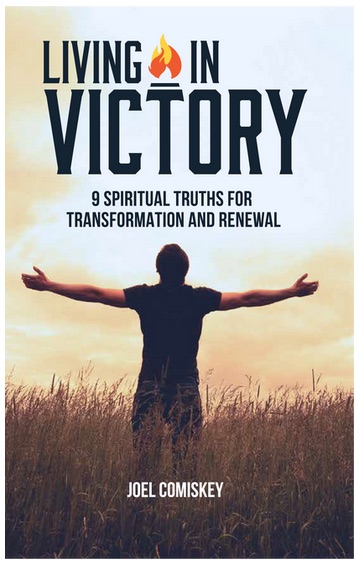
Dr. Joel Comiskey is a missionary, church planter, educator and author whose coaching ministry’s goal is RESOURCING CHURCHES TO MULTIPLY DISCIPLES THROUGH SMALL GROUPS. Here is a volume that can assist church leaders in their personal and ministry: Living in Victory: 9 Spiritual Truths for Transformation and Renewal.

The need for this book is summarized in the introduction: “Many people… Need victory in their Christian lives. They have excepted Jesus, but are not walking in the abundant life that God has for them. God, in fact, once all of us to experience victory in our Christian lives.but the victory of God is not a one time thing. Rather, it’s a journey that leads through good and bad times. More than event; it’s a lifestyle.”

Comiskey’s team has excellent resources on church leadership, especially advocating the advantages of the cell church model.

Here are principles that have been important in his spiritual development:

“In this book, I’ve pinpointed nine principles and priorities that will help a believer live a victorious Christian life. They are:

  • victory in preparing for eternity
  • victory in experiencing God’s love
  • victory in God’s grace
  • victory in God’s sovereignty
  • victory in spending time with Jesus
  • victory in close relationships
  • victory in the local church
  • victory in rest
  • victory in healthy living

These nine priorities will help you understand and apply principles that are simple, biblical, and time-tested to produce spiritual, emotional, and physical benefits. My aim is to stimulate you to live these biblical truths while allowing the Holy Spirit to transform you.”

To get the book, check out his blog, or investigate other resources, visit https://jcgresources.com/

Living Daily in God’s Grace

Wayne Barber’s book, The Rest of Grace, has been published in a second edition with the title Living Daily in God’s Grace. It is available as a free PDF download here.

“For fourteen years, Wayne (1943-2016). served as co-teacher with Kay Arthur at Precept Ministries. During that time, he had the great honor of studying with Dr. Spiros Zodhiates and co-hosted the national radio and TV program, New Testament Light. He was president and founder of Living Grace Ministries. He co-authored the Following God Bible study series published by AMG Ministries and authored several books…” www.waynebarber.org/

Here is an excerpt:

  • “For to me, to live is Christ and to die is gain” (Philippians 1:21).
  • “When Christ, who is our life, is revealed, then you also will be revealed with Him in
    glory” (Colossians 3:4).
    These statements form a foundation for understanding grace as a product of our new birth in
    Christ. He lives in us to enable us to do what He has commanded us to do. Previously I was
    under the law and condemned by it, but now I’m no longer under the law. I’m under grace.
    Christ lives in me. He enables me to do what He has commanded me to do. A believer has to grasp this concept if he is to ever become mature in the Lord. He has to come to the end of himself and start realizing what he can’t do before he can grasp what God can do in and through him. This book isn’t just another step-by-step process that promises instant maturity, but an encouragement for believers to see their relationship with the Lord in a new way.
    The Christ life is not merely trying some new plan for spiritual growth; it is learning to live out
    of His power. It is learning to appropriate the power of God and put it to use for His glory.” p.14

    There are 24 of Dr. Barber’s sermon series on his legacy web site. For example, Romans, Joshua, and Journey of the Christ Life. www.waynebarber.org/

    Identity and Pastoral Ministry

    Identity is a key issue in pastoral ministry. As men, for example, we tend to base our significance and identity on our vocation. When we serve as a missionary, pastor or other vocational Christian minister, it is easy for that role to become our primary identity. The problem with that is that if/when our role changes our identity is affected. One of the perils of retirement is that it can trigger an identity crisis.

    Identity is also important in how we minister the Word. Too often preaching comes across as “doing in order to be” instead of “being in order to do.” Eohesians 2:10 gives the right pattern: “For we are His workmanship, created in Christ Jesus for good works, which God prepared beforehand that we should walk in them” (NKJV).

    Pastor Eric Geiger calls attention to how a grace-based identity is liberating:

    “Attempting to live out our faith without first understanding our identity leads to a legalistic faith. Instead of enjoying the freedom that comes from a vibrant relationship with Christ, many Christians are handcuffed with performance-based Christianity. And the Christian life
    becomes a list of ‘have to’s.’…

    “Sadly, church leaders and pastors (myself included) have perpetuated the problem by neglecting to teach people who they are. Instead we offer pointers to people on what to do or how to live. It is much easier to teach and preach through lists of what people should do. ‘Do these things. Live this way.’

    “While practical and application-oriented teaching is critical, we must be careful not to approach the faith as a way to act ourselves into a new identity. Instead of beginning with identity, we often begin with behavior. The order is wrong. Our identity must be the starting point. When we understand who we are, we are motivated to live the reality of who we are.” [1]

    Consider this list of biblical identity truths. Since they are conditional on being IN CHRIST, they do not cause pride, but rather grateful dependence on our Saviour.

    The Word of God declares that if I am in Christ…

    1. I am God’s child for I am born of the incorruptible seed of the Word Of God which lives and abides forever. 1 Pet. 1:23
    2. I am forgiven of all my sins and washed in the Blood. Eph. 1:7; Heb. 9:14; Col. 1:14; 1 John 2:12, 1:9
    3. I am a new creature. II Cor. 5:17
    4. I am the temple of the Holy Spirit. 1 Cor. 6:19
    5. I am delivered from the power of darkness and translated into God’s kingdom. Col. 1:13
    6. I am redeemed from the curse of the law. 1 Pet. 1:18, 10; Gal. 3:13
    7. I am blessed. Deut. 28:1-14; Gal. 3:9
    8. I am a saint. Rom. 1:7; 1 Cor. 1:2; Phil. 1:1
    9. I am holy and without blame before Him in love. 1 Pet. 1:16; Eph. 1:4; 1 Cor. 1:8
    10. I am elect. Col. 3:12; Rom. 8:33
    11. I am established to the end. 1 Cor. 1:8
    12. I am made near by the Blood of Christ. Eph. 2:13

    When believers in Christ renew their mind with these facts, they base their personal, spiritual, essential identity on God’s revelation.

    Since we are to walk by faith, we must take God’s Word on it! As we do, the Holy Spirit will increasingly direct our conduct to reflect who we really are in Christ.

    May we as disciples and Christian leaders base our essential identity on our being “in Christ” rather than in a leadership role. And may we minister the Word in a way that is supported by affirming the believer’s positive and secure identity in Christ.


    [1] Eric Geiger, Identity: Who You Are in Christ (Nashville: B & H Publishing, 2008), from ch. 1

    For a more complete identity list see https://gracenotebook.com/let-the-real-you-stand-up/

    J.B.W.

    How to Encourage Your Pastor’s Heart

    by Harold Vaughan

    Question: What are specific actions that people do that encourage you?

    A1. Asking how they can pray for me and my wife, and then telling me how they prayed specifically for us.

    A2. Stopping to pray with me in the foyer on a Sunday AM/PM.

    A3. Telling me specifically how the message challenged/convicted them (Not, “That was a good sermon, preacher!).

    A4. Writing thank you notes/cards with specific words of encouragement.

    A5. Initiating a time of fellowship at their home, coffee shop, restaurant, outdoor activity, or dropping by the house.

    Question: What are some general principles for encouraging a pastor?

    A1. Coming up with solutions and not complaints.

    A2. Sharing what they are learning through the message.

    A3. Maturing in personal study and sharing that with their pastor.

    A4. Blessing the pastor’s kids with gifts and notes of encouragement.

    A5. Being spiritually hungry!

    A6. Faithful attendance and participation in services and activities. 

    Question: What do others do that tries your patience?

    A.1 Joking about pay, time off, or time with family.

    A2. Unhelpful opinions.

    A3. Complaints and no solutions.

    A4. Gossip about family.

    A5. Expectations of children to be perfect.

    A6. No spiritual appetite amongst members.

    Question: What are some general things in the church as a whole that encourages you?

    A1. Stability – in the home and church.

    A2. Usability—when we see God using our ministry efforts.

    A3. Encouragers.

    A4. Having our needs met. 

    A5. Refreshment—The absolute need of refreshment that must come from the Lord alone is absolutely vital. The refreshment that comes from getting away… coming apart if you will.

    A6. Faithful men that stand with you.

    A7. God’s blessing. 

    Question: What are some general things in the church as a whole that discourage you?

    A1. The opposite of those things listed above.

    A2. The 1% or 2% of people in the congregation that simply refuse to get things right with God and seek to stir up strife and conflict.

    A3. Family and ministry strife. 

    A4. Physical battles. 

    A5. Unanswered Prayer.

    A6. Unrealized financial expectation.

    Note: Several pastors contributed to this project. I hope you are informed and helped by this article. Let’s encourage our ministers.

    Harold Vaughan 

    ChristLifeMin.org
    Christ Life Ministries
    PO Box 399
    Vinton, VA 24179