“The elders who are among you I exhort, I who am a fellow elder and a witness of the sufferings of Christ, and also a partaker of the glory that will be revealed: Shepherd the flock of God which is among you, serving as overseers, not by compulsion but willingly, not for dishonest gain but eagerly; nor as being lords over those entrusted to you, but being examples to the flock; and when the Chief Shepherd appears, you will receive the crown of glory that does not fade away” (1 Peter 5:1-4).
However, the stress of ministry and the temptations of our spiritual enemies can gradually corrupt our motives.
“And the word of the Lord came to me, saying, “Son of man, prophesy against the shepherds of Israel, prophesy and say to them, ‘Thus says the Lord God to the shepherds: “Woe to the shepherds of Israel who feed themselves! Should not the shepherds feed the flocks?…” (Ezekiel 34:1-2).
Chaplain “Believing Thomas” gives a brief exposition of this passage from Ezekiel. In this teaching he covers:
Why God says, “I am against the shepherds”
What the neglected sheep reveal about self-serving leadership
Why God promises, “I, I Myself will search for My sheep”
How the promised Son of David leads us to Jesus
Why the Good Shepherd lays down His life for the sheep
How Scripture calls us to test human shepherds
Why biblical submission never places a leader above Christ or His Word
How faithful under-shepherds serve from dependence on Christ
May we allow God’s Spirit to search our hearts, realign us with the motives of the Good Shepherd, and grant us a restorative ministry.
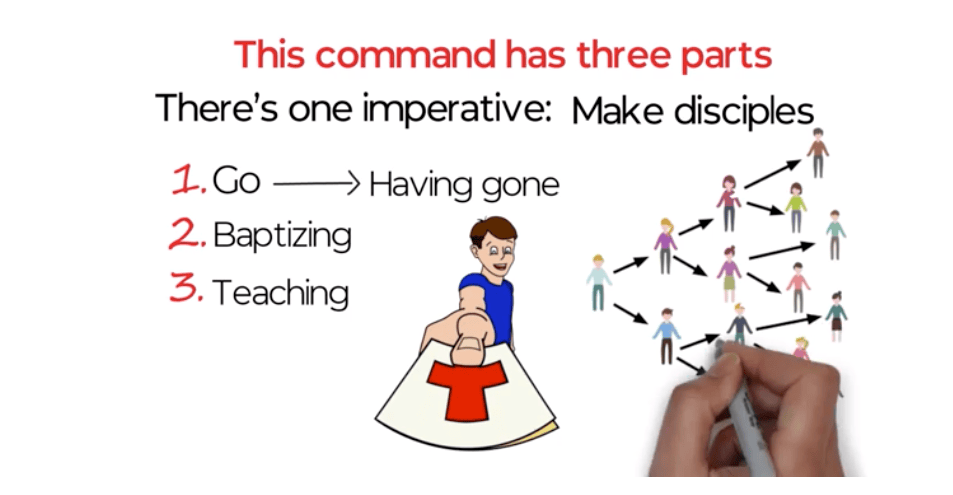
Over the years I have used some courses by Institute for Training in Ministry (iTim). It’s one thing to confess the doctrine of the priesthood of believers (1 Peter 2:5), and the importance of the Great Commission (Matt 28:18-20); it’s another to use a curriculum that is designed to do just that. iTim is intentional about training and equipping.
“And He Himself [the risen and ascended Christ] gave some to be apostles, some prophets, some evangelists, and some pastors and teachers,for the equipping of the saints for the work of ministry… (Eph. 4:11,12).
iTIM consists of 18 courses, workbook in format, on 5 ministry tracks: Discipleship, Church Ministries, Church Leadership, Bible Teaching, and Pastoral Ministry. Each course features solid biblical content, personal applications, and a practicum wherein learners put into practice what they have learned in that course.
iTIM features a “head”, “heart”, and “hands” approach to learning. This means that all iTIM courses include:
vital content
life applications
ministry involvement [1]
The iTim materials are available in English, Spanish, Russian and Chinese. To learn more, take their free online seminar (which is required to purchase the paperback or digital copies of their curriculum). Here is a sample video from the seminar:
JBW
Thank you to pastor Jeff Barbieri of GEM Ministries for introducing me to this curriculum.
By the end of 1999, I was completely exhausted. I had been in Fuerteventura for almost two years—an island that, back then, was very small and deeply identified with Catholic tradition, where preaching the Gospel met with great resistance. I had put into practice everything I had been taught: evangelistic campaigns during the three summer months, street preaching, distributing thousands of tracts, prayer, fasting, and many other initiatives. I describe this entire process in detail in my book What Does God Ask of You? (¿Qué pide Dios de ti?), available on Amazon. However, the physical, emotional, and spiritual toll was so intense that, upon finishing the last evangelistic campaign of 1999, I fainted from psychological exhaustion. I felt I no longer had the strength to go on.
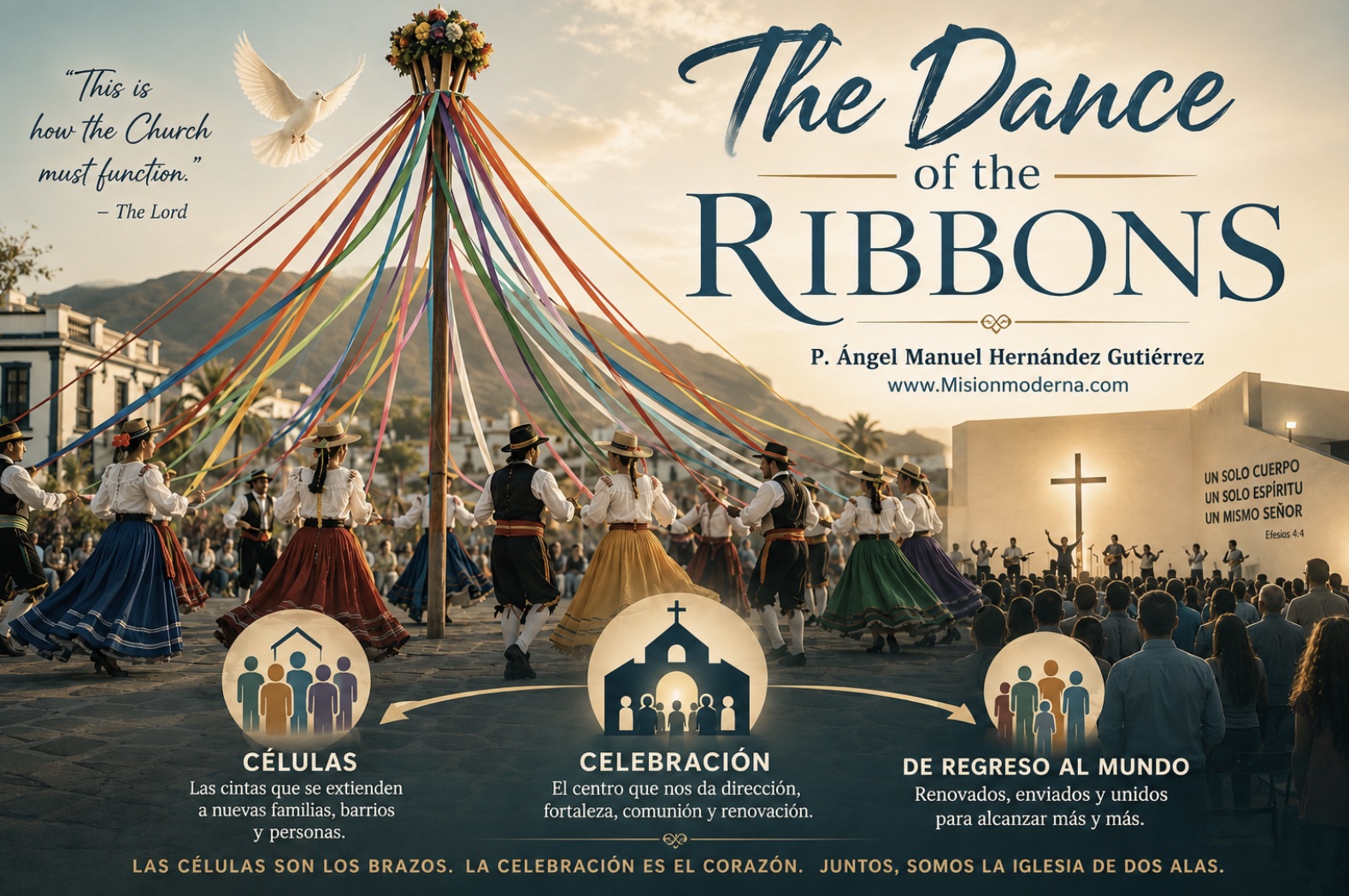
It was that very night when the Holy Spirit woke me up and placed a very clear image in my heart. He reminded me of a traditional dance from the Canary Islands called La Danza de las Cintas (The Dance of the Ribbons). Those who are not from the Canaries might not be familiar with it. In this dance, a group of dancers moves around a central pole while holding long, colorful ribbons. As they move forward, the ribbons extend, cross, and intertwine in a precise order until the pole is completely covered. Then, retracing their steps in the opposite direction, the ribbons unravel and become fully extended once more. The entire process requires coordination, unity, and for each participant to remain faithful to their spot.
As I contemplated that image, the Lord spoke to my heart: “This is how the Church must function.”
I understood that each ribbon represented a cell group reaching out to touch new families, new neighborhoods, and new people. The further the ribbons extend, the greater the reach of the church. Yet, they all return to the same center—the Sunday celebration—where the body receives direction, strength, fellowship, and renewal to go out once again. That day, I grasped a principle that has marked our ministry throughout all these years: cell groups produce growth; the celebration produces strength. Cell groups are the arms of the church, reaching where the temple building cannot; the celebration is the heart, giving unity, identity, and strength to the entire body.
Since we began applying this model, the church has never stopped growing or growing stronger. That small congregation of barely eight people has become, by the grace of God, a church of more than two thousand people integrated into cell groups, welcoming an average of nearly sixty new people every month. Looking back, I am convinced that that moment of exhaustion was not the end of our ministry, but the beginning of a new chapter—one in which God showed us that His work does not grow through the efforts of a few, but through a united body that extends outward and continually returns to its center to receive new strength. In other words: the two-winged church.
Blessings from Above, Pastor Ángel Manuel Hernández Gutiérrez, Misión Cristiana Moderna
Not I, but Christ: A Practical Theology of the Abiding Life by Believing Thomas
Book description:
“With pastoral warmth and theological clarity, this book addresses the questions believers actually carry: How do I fight sin without returning to self-effort? How does assurance relate to holiness? What does it mean to live under grace without drifting into passivity? How do fear, suffering, accusation, confession, renewal, and the shared life of the church fit into abiding in Christ. Written for weary believers, pastors, ministry leaders, and those who care for souls, Not I, but Christ does not offer another method for managing the Christian life. It recovers the center. Christ is the source. The self is not the supply. The verdict is settled in Christ, obedience is fruit rather than payment, and the one who gives life is also the one who keeps his people to the end.”
Here is an excerpt from chapter 4:
Pastoral distortions: the three errors abiding corrects
Abiding is commonly distorted in three ways: legalism, passivity, and self-reliance.
Legalism hears “abide” as “stay good enough.” Abiding becomes the condition for Christ to remain near, and the gospel begins to feel like a probationary arrangement in which nearness must be maintained by performance. John 14 corrects legalism by promising indwelling. John 15 corrects it by defining fruit as the product of connection, not the cause of connection. Philippians 2 corrects it by grounding obedience in God’s working.
Passivity hears “apart from me you can do nothing” and concludes, “Then maybe I should just stop trying and wait for God to do something.” Inability to self-supply gets mistaken for permission to neglect obedience. John 15 corrects passivity by insisting that abiding bears fruit and that fruit glorifies the Father. Philippians 2 corrects it by commanding “work out” while grounding that command in divine working.
Self-reliance can use abiding language while remaining self-supplied. Abiding becomes a technique for outcomes: “If I do the right things in the right way, growth will happen.” John 15 corrects self-reliance by declaring that the branch cannot bear fruit “by itself” and that “apart from me you can do nothing.” The emphasis is source, not method. John 14 corrects self-reliance by locating abiding within the Spirit’s indwelling presence. Philippians 2 corrects it by teaching that both willing and working are God’s work within the believer. Practices are not engines. They are means of dependence. Christ has not called his people to create life, but to remain in the life he gives.
This volume is highly recommended to edify believers and help equip disciplers.
“Believing Thomas” has a M.A. in Discipleship Counseling from Luther Rice Seminary and is a certified Chaplain and Exchanged Life Counselor with Grace Fellowship International.
During a visit to TransWorld Radio’s office in Canada I learned about a discipleship project they created. It is available for free at www.twr360.org/ministry/110
Discipleship Essentials is an open-use, multimedia curriculum for sermon preparations, small group studies, discipleship and mentoring. The courses are flexible and open to anyone, including pastors, lay leaders, missionaries, and individuals. Choose specific lessons or complete the entire course!
Each lesson has downloadable video, audio dramatic introductions as well as PDF Leader’s Guide, Lesson Essentials, and Study Guide.
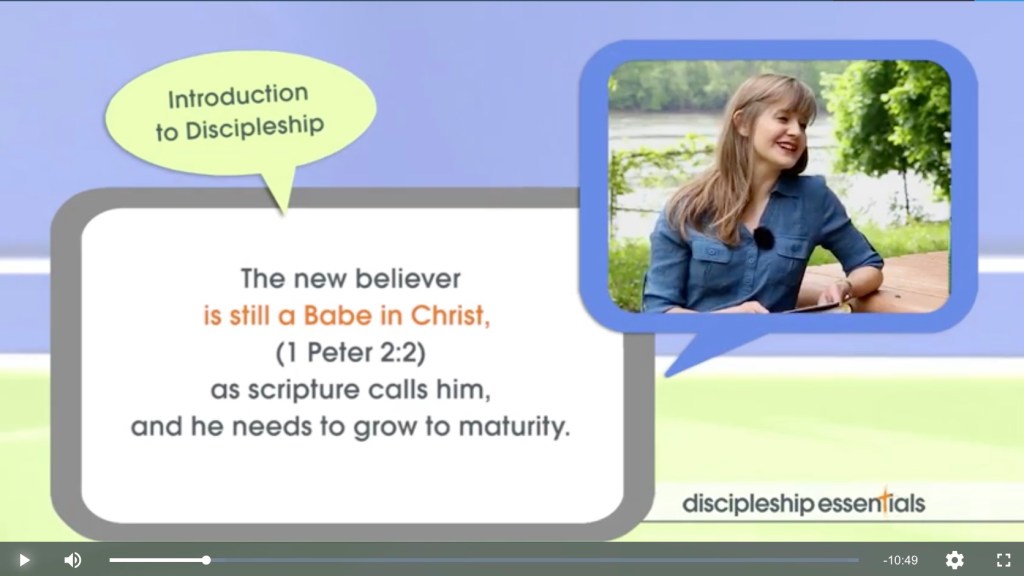
Essentials for Christian Living: This course provides lessons on a broad range of essential Christian topics. This will be of special interest to new believers and will equip them to submit to the authority of Jesus Christ in all things, grow in Christlikeness and obedience, increase in their knowledge of God and His Word, serve others in love, and to multiply the Church through evangelism and discipleship.
Essentials for Spiritual Leadership provides lessons specifically related to leadership from a Christian perspective, and the arenas of life in which one can exercise spiritual leadership. The intended audience for Essentials for Spiritual Leadership are Christians who have a foundational understanding of the Christian faith and practice and who have begun to lead others in the faith. Spiritual leadership takes place in home, at the workplace, in small groups and discipleship relationships and in formal positions within the church such as teacher, pastor, elder or deacon.
First video to introduce Essentials for Spiritual Leadership
See this page for a full listing of the two courses, the modules and individual lessons. They are all free online to use and share in your personal or church ministry to help fulfill the Great Commission: https://www.twr360.org/ministry/110/
In the 1980’s John R. W. Stott wrote an influential book on biblical preaching titled Between Two Worlds: The Art of Preaching in the Twentieth Century. In it he described the challenge of preaching as creating a bridge between two worlds — the world of the biblical text and the world of the contemporary hearer. In an interview with R. Albert Mohler, Stott summarized this topic:
To build a bridge between the modern world and the biblical world we must first be careful students of both. We must be ever engaged in careful biblical exegesis, conscientiously and continually, and yet also involved in careful study of the contemporary context. Only this will allow us to relate one to the other.
I find it helpful in my own study to ask two questions of the text — and in the right order. First, “What does it mean?” and second, “What does it say?”
… we must accept the discipline of grammatical and historical exegesis, of thinking ourselves back into the historical, geographical, cultural, and social situation in which the author was writing. We must do this to understand what the text means. It cannot be neglected.
The second question moves us from the original meaning of the text to its contemporary message — “What does it say?” If we ask the first question without asking the second, we lapse into antiquarianism, unrelated to modern reality.
On the other hand, if we leap to the second question, “What does it say today?,” we lapse into existentialism, unrelated to the reality of biblical revelation. We have to relate the past revelation of God to the present reality of the modern world.[1]
I also recall evangelist /apologist Ravi Zacharias speaking of three levels of biblical teaching/reasoning. An article posted in “James’ Mirror” outlines these levels:
In Zacharias’ framework, our arguments must begin by establishing truth (level 1) before applying it to ourselves existentially (level 2) and then prescribing it to others (level 3). In every area of life the questions associated with these levels must be answered sequentially. 1) Is my belief tenable? Can I defend it with the laws of logic? 2) Is it livable? Can there be a harmony in existence? 3) Is it transferable? Do I have the right to make moral judgments? …Zacharias details this process in the appendix of his book, A Shattered Visage.[2]
Here is an additional way to think of the “worlds” or “levels” involved in the dynamic, accurate, practical communication of God’s Word in teaching and preaching.
The Biblical world.
As John Stott affirmed, we need to respect the inspiration and authority of God’s Word (2 Tim. 3:16,17). It needs to be interpreted accurately, with illumination by the Holy Spirit (John 16:14). But before moving to the next “world” context, the biblical teacher needs to put Old Testament and New Testament teaching before Pentecost (Acts chapter 2) in the context of the New Covenant. To neglect this is to slip into a Galatian heresy of mixing law and grace, not only regarding justification, but also regarding sanctification (Gal. 2:20,21; 3:1-3, 24, 28; 5:1-6).
The modern world.
Here we track with the second “world” described by John Stott. We are to be like the men of Issachar “who had understanding of the times, to know what Israel ought to do” (1 Chron. 12:32). Biblical prophets were to “forth-tell” (as well as foretell) God’s Word as it related to their generation. Today’s preacher should address our current context, but with timeless principles.
My personal world. Here Ravi Zacharias’ perspective is noted. The biblical preacher needs to apply God’s inspired, culturally relevant truthto his own life. We don’t want to fall into the pattern of the pessimistic description of teaching whereby the information travels from the textbook, through the teacher, through the student, on to the student’s notebook but without engaging the minds of either one!
We should aspire to Paul’s values of mentoring by example:
“Imitate me, just as I also imitate Christ” (1 Cor. 11:1).
“For though you might have ten thousand instructors in Christ, yet you do not have many fathers; for in Christ Jesus I have begotten you through the gospel. Therefore I urge you, imitate me” (1 Cor. 15,16).
Therefore he exhorts the preacher (through Timothy) to “be an example to the believers in word, in conduct, in love, in spirit, in faith, in purity” (1 Tim. 4:12).
Although we can’t model perfection—we haven’t arrived—but we can model humility, sincerity, and integrity by the enablement of the Holy Spirit (Phil. 2:12,13; 3:12). Thus, we don’t bypass personal application. We can testify of how the truth is impacting our lives, including our response with struggles and victories.
The listener’s world
When someone is listening to a sermon, although they should revere God’s Word, understand their culture, and appreciate glimpses of the preacher’s interaction with the message in his own life, the bottom line is that people are concerned about their own lives. “How can this biblical message help me know and worship God, handle personal problems, and improve relationships?” A prominent topical preacher remarked that people will listen for a long time if they perceive the message is about their own lives. Admittedly, ultimate needs should be proclaimed even when they are not obviously related to “felt needs,” but the preaching should apply the message in practical, relevant ways.
Is our biblical teaching/preaching connecting wisely with these four “worlds” of the Bible, our culture, our personal life, and the needs of the hearers? Which one(s) needs to be elevated for fruitful, impactful communication of God’s Word though our ministry?
For example, how would Amos chapter 4 be taught/preached as an exposition that includes these contexts? Here is an example from Chaplain “Believing Thomas” at YouTube.com/@rootedinChristyt
[1] Between Two Worlds: The Art of Preaching in the Twentieth Century, Eerdmans, 1982.
“For many years the Rector of All Souls Church in London, Stott was also the founder and director of the London Institute for Contemporary Christianity. His preaching ministry became a model of the effective communication of biblical truth to secular men and women. The author of several books, his voice and pen were among the most determinative forces in the development of the contemporary evangelical movement in the Church of England and throughout the world.” https://preaching.org/preaching-between-two-worlds/
The apostle Paul testified to the elders of Ephesus, “…for I did not shrink from declaring to you the whole counsel of God” (Acts 20:17).
One of the ways to declare more of the whole counsel of God is to have a scope and sequence plan. A widely used plan is the International Sunday School Lessons Uniform Series.[1] This is a 6 year cycle for reading and studying the Bible. An effort is made to take at least 1 lesson or daily Bible reading from each book of the Bible over the 6-year span. See the 6 year plan here.
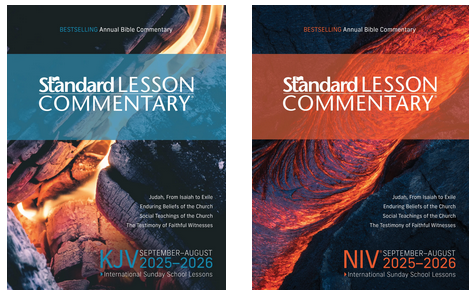
A helpful edition of the adult lessons with commentary and other features is the Standard Lesson Annual Commentary. The current September-August annual commentary is issue 73. It includes 52 weeks of study in a single volume combined with thorough Bible study with relevant examples and questions. “This Quarter in the Word” is included which provides daily Bible readings to encourage study throughout the week
In addition to teaching aids and student activity pages, Standard Publishing creates PowerPoint® and Google Slides™ presentations for each lesson.
To further encourage personal engagement daily, their publication Devotions®, supplements the daily Bible readings recommended in the Standard Lesson Commentary with practical devotional thoughts.
Another supplementary resource from this publisher is the Power for Living® full-color weekly take-home paper. It can be a useful tool for both personal growth and evangelism. “With life-related stories of faith, Power for Living connects God’s truth to real life.”
The parent company of Standard, David C Cook, has parallel curricula and resources including Bible in Life and Echoes. Their daily devotional guide is The Quiet Hour and the current events blog is Real Life Downloaded.
OK, but this article is more than an infomercial.[2] The Annual Commentary and related resources could be used or adapted in a variety of ways. Note the potential for preaching on the lesson theme, recommending the daily readings, using the in-print daily devotional for edification, the current events blog for introductions (or illustrations), and the Power for Living weekly flyer for outreach/ follow up. Discussion questions based on the lessons could be provided for small group fellowship during the week.
A mentor of mine, pastor John Shepherd, used a “P.T.A” approach in the 1990’s. He preached the Sunday morning sermon, taught on the topic in the evening, and encouraged cell groups to apply the content in their discussion time.
May this overview of resources be useful in preaching, teaching and applying “the whole counsel of God.”
[1] This interdenominational content is not distributed directly from ISSL, but through publishers contracted with them
[2] I have used, and appreciate, these materials but am not being paid to promote them.
The problems of mental/emotional/relational and spiritual health are a major challenge in our country and world. The treatment of these problems should include an emphasis on education, prevention, as well as biblically informed care.
An article by Faithward, “Mental Health Challenges and the Church,” affirms
“Both faith and science are necessary and should complement each other as we learn to live with mental health challenges. Medications may stabilize symptoms, but the experience of love in relationships and our connection with God and other people leads toward genuine healing. Family members, friends, and a supportive faith community can model God’s unconditional love by assuring the person they are not alone in the midst of personal darkness. Reassuring scripture passages include Isaiah 43:1-4; Psalm 139:7-12; and 1 John 4:16b, 18a.” [1]
Christ’s mission included physical, spiritual and heart healing:
“The Spirit of the Lord is upon me, because he has anointed me to proclaim good news to the poor. He has sent me to proclaim liberty to the captives and recovering of sight to the blind, to set at liberty those who are oppressed, to proclaim the year of the Lord’s favor.” Luke 4:18,19; Isa 61:1–2
And the Lord’s ministry should continue through Great Commission churches. “Jesus said to them again, ‘Peace be with you. As the Father has sent me, even so I am sending you’” (John 20:21).
An example of equipping believers for holistic care is Stephen Ministries. This non-profit Christian educational organization trains “Stephen Leaders” who then train others in their congregation to be “Stephen Ministers.” These mean and women have a ministry of accompanying those who are facing some crisis in life, such as illness, death of a loved one, divorce, relocation, or financial setback.
This year Stephen Ministries is celebrating their 50th anniversary. They are presenting one day seminars in cities across the U.S. An important part of that day is a presentation on “How Your Congregation Can Help Combat the Mental Health Crisis.” One of our Grace Fellowship Guides attended this event and passed on the notice that this module is now available as an online slideshow.[2] The presentation is online here:
Slideshow
Sensitive care is a basic discipleship responsibility: “Bear one another’s burdens, and so fulfill the law of Christ” (Gal. 6:2).
May pastors take the opportunity to equip the saints (Eph. 4:12) to help combat the mental health crisis.
One of the most exemplary, Christ-centered, grace-oriented pastors and authors of yesteryear was Andrew Murray of South Africa.
The Christian Classics Ethereal Library provides 11 of his books as free downloads. He is introduced there: “Apart from his evangelistic tours in South Africa, he spoke at the Keswick and Northfield Conventions in 1895, making a great impression. upon his British and American audiences. For his contribution to world missions he was given an honorary doctorate by the universities of Aberdeen (1898) and Cape of Good Hope (1907). Murray is best known today for his devotional writings, which place great emphasis on the need for a rich, personal devotional life. Many of his 240 publications explain in how he saw this devotion and its outworking in the life of the Christian. Several of his books have become devotional classics.” [1]
In 1895 Andrew Murray gave a series of messages at Moody Bible Institute in Chicago. The transcripts were edited and published as the book, The Spiritual Life. An audio edition is online here:
Every Christian leader can receive much edification about the spiritual life from this book.
Suggestion: Murray’s book, New Life: Words of God for Young Disciples , is arranged in 52 concise chapters, so it could be used for a weekly prayer meeting for a full year.
Additional favorites include A Deeper Christian Life and The Two Covenants.
Adrian Rogers (1931-2005) was a pastor who served three terms as president of the Southern Baptist Convention. He published eighteen books and his works are featured on the radio and television program, Love Worth Finding. He was also the founder of the Adrian Rogers Pastor Training Institute for ministers.
“Known for his unique ability to simplify profound truth so that it can be applied to everyday life, Adrian Rogers was one of the most effective preachers, respected Bible teachers, and Christian leaders of our time. For over fifty years, through his evangelistic zeal and uncompromising commitment to the Word of God, he consistently presented the Good News of Jesus Christ with strong conviction, compassion, and integrity.[1]
Part of pastor Rogers’ legacy is the section of the Love Worth Finding web site that features The Pastor’s Study. This includes