
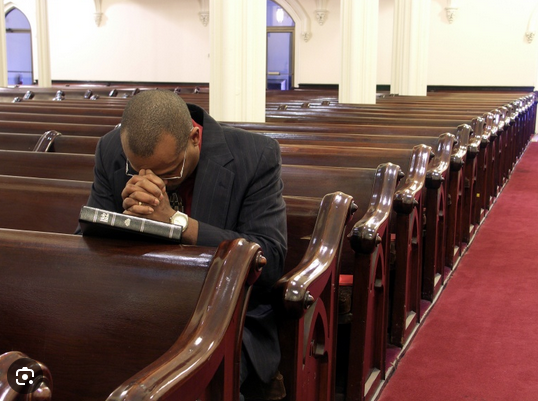
How does our society perceive the character of pastors today? Some prominent pastors are invited to the White House for consultation (like Billy Graham) or interviewed about religious events and topics on TV news. Others who are caught in a sexual or monetary scandal become infamous as they are held up to public scrutiny as poor role models.
The New Testament’s gives lists of character quality standards for elders and deacons in the pastoral epistles. For example, “This is a faithful saying: If a man desires the position of aa bishop [overseer], he desires a good work. A bishop then must be blameless, the husband of one wife, temperate, sober-minded, of good behavior, hospitable, able to teach…” (1 Tim. 3:1,2 NKJV). The list concludes with this principle: “Moreover he must have a good testimony among those who are outside, lest he fall into reproach and the snare of the devil” (v. 7).
Years ago Gene Getz wrote a good exposition of this topic in his book, The Measure of a Man: Twenty Attributes of a Godly Man.
We would confess that we all “miss the mark” (Rom 3:23; James 3:1,2), and those who are exemplary would give credit to the enabling of the Holy Spirit. As Paul testified, “But by the grace of God I am what I am, and His grace toward me was not in vain…” (1 Cor. 15:10 NKJV).
What was the perception of Christian leaders in the Middle Ages? The Canterbury Tales by Geoffrey Chaucer gives relevant character sketches.
“Geoffrey Chaucer wrote The Canterbury Tales, a collection of stories in a frame story, between 1387 and 1400. It is the story of a group of thirty people who travel as pilgrims to Canterbury (England). The pilgrims, who come from all layers of society, tell stories to each other to kill time while they travel to Canterbury (England).”[1]
Among these travelers, four are Christian leaders. The monk was portrayed as self-indulgent, the friar was described as guilty of immoral sex and gluttony. The pardoner had similar vices but made money by selling fraudulent relics. However one stood out as virtuous—the parson. This character is described in lines 465-516 of this poem written in Middle English. Here is this section in a modern English version:
A good man was there of religion,
480 He was a poor COUNTRY PARSON,
But rich he was in holy thought and work.
He was a learned man also, a clerk,
Who Christ’s own gospel truly sought to preach;
Devoutly his parishioners would he teach.
485 Gracious he was and wondrously diligent,
Patient in adversity and well content,
Many times thus proven had he
He excommunicated not to force a fee,
But rather would he give, there is no doubt,
490 Unto his poor parishioners about,
Some of his income, even of his property.
He could in little find sufficiency.
Wide was his parish, houses far asunder,
But never did he fail, for rain or thunder,
495 In sickness, or in sin, or any state,
To visit the farthest, regardless their financial state,
Going by foot, and in his hand, a stave.
This fine example to his flock he gave,
That first he wrought and afterwards he taught;
500 Out of the gospel then that text he caught,
And this metaphor he added thereunto –
That, if gold would rust, what shall iron do?
For if the priest be foul, in whom we trust,
No wonder that a layman thinks of lust?
505 And shame it is, if priest take thought for keep,
A shitty [dirty] shepherd, looking after clean sheep.
A truly good example a priest should give,
Is his own chastity, how his flock should live.
He never let his benefice for hire,
510 And leave his sheep encumbered in the mire,
And ran to London, up to old Saint Paul’s
To get himself a chantry there for souls,
Nor in some fraternity did he withhold;
But dwelt at home and kept so well the fold
515 That never wolf could make his plans miscarry;
He was a shepherd and not mercenary.
And holy though he was, and virtuous,
To sinners he was not impiteous,
Nor haughty in his speech, nor too divine,
520 But in all teaching courteous and benign.
To lead folk into Heaven by means of gentleness
By good example was his business.
But if some sinful one proved obstinate,
Whoever, of high or low financial state,
525 He put to sharp rebuke, to say the least.
I think there never was a better priest.
He had no thirst for pomp or ceremony,
Nor spiced his conscience and morality,
But Christ’s own law, and His apostles’ twelve
530 He taught, but first he followed it himself.
The way a Christian leader’s character is demonstrated may change with the centuries, but the need for virtuous character and integrity is vital in every culture. Paul went on to counsel Timothy (and all of us) “be an example to the believers in word, in conduct, in love, in spirit, in faith, in purity” (1 Tim. 4:12).
For a full description of the four Christian characters in the Canterbury Tales, see Pastors in the Classics: Timeless Lessons on Life and Ministry from World Literature, by Leland Ryken, Philip Ryken and Todd Wilson (Baker Books), pp 17-22.
JBW
[1] http://www.librarius.com/canttran/gptrfs.htm
[2] The Canterbury Tales by Geoffrey Chaucer (1342 – 1400)
Edited for Popular Perusal by D. Laing Purves
 Revitalizing Pastors