
The Holy Spirit in Ministry and Transformation

by pastor Joe Humrichous

“‘Not by might nor by power, but by My Spirit,’ Says the Lord of hosts.” (Zech 4:6b)

Joe Humrichous is the author of The Vine and The Church and leads Paradigm 1. The purpose of his ministry is “to encourage and equip pastors, churches and families to practice leadership and united prayer under the active headship of Christ (Matthew 16:18). This paradigm assumes the philosophy that only what is done under Christ’s authority will bring glory to God (Matthew 28:18).”

The video above introduces his article on “The Holy Spirit in Ministry and Transformation,” Here he writes:

“How many times as a vineyard worker have you been discouraged because of the seeming lack of growth in the professing branches to whom you minister? We long for repentance, growth, and change. We work to improve our messages, both in delivery and content. We explore possibilities of some new ministry functions and seek advice from others in what they may be doing. Honestly, sometimes we just flat out worry, are discouraged, and complain!

“This chapter is to remind us of the most excellent character, presence, and authoritative power of God the Holy Spirit. He is the Spirit of Christ with us and within us that changes lives. We are not orphans, and in all our weakness and fear, we can experience the demonstration of the Spirit and power so that the whole congregation’s faith should not be in the wisdom of men but the power of God (I Corinthians 2:4,5). Our speech and preaching may be persuasive and humanly excellent, but without the Holy Spirit, lives are only moved but not changed. How powerful when the “lunch” of a well-prepared message is placed in the hands of the Holy Spirit who then breaks it, blesses it, and feeds the multitude. It’s the best of both worlds.”

The author then lists 35 activities of the Holy Spirit, with biblical references. This is followed by a longer list of testimonial observations.

The apostle Paul credited New Testament transformation to the ministry of the Holy Spirit: “But we all, with unveiled face, beholding as in a mirror the glory of the Lord, are being transformed into the same image from glory to glory, just as by the Spirit of the Lord” (2 Cor. 3:18).

Read the full article here: www.paradigm1.org/blog/the-holy-spirit-and-transformation/

Dignity and Responsibility: Grace and Truth

“O Lord, our Lord,
how majestic is your name in all the earth!
You have set your glory above the heavens.
Out of the mouth of babies and infants,
you have established strength because of your foes,
to still the enemy and the avenger.
When I look at your heavens, the work of your fingers,
the moon and the stars, which you have set in place,
what is man that you are mindful of him,
and the son of man that you care for him?
Yet you have made him a little lower than the heavenly beings[b]
and crowned him with glory and honor.
You have given him dominion over the works of your hands;
you have put all things under his feet,
all sheep and oxen,
and also the beasts of the field,
the birds of the heavens, and the fish of the sea,
whatever passes along the paths of the seas.
O Lord, our Lord,
how majestic is your name in all the earth!” (Psalm 8, ESV)

This Psalm is a wonderful devotional meditation on Genesis chapters 1-2.

When a sermon is given on a passage like this, the allusions to Genesis should be brought out along with practical applications about the dignity and responsibilities of men and women made in God’s image. Although this image was marred at the Fall, we still have this dignity and— through sanctification—the restoration process continues (Col. 3:10).

But the Christian exposition of this passage would be incomplete unless there was a recognition of quotations in the New Testament (Psalm 8:2 / Matt. 21:16; Psalm 2:4-6 /Heb. 2:6-8). A resource that usually brings out the New Testament fulfillment of Old Testament passages is the notes of the Grace and Truth Study Bible (Zondervan, 2022). “Rich passage-by-passage study notes are theologically sound, guiding you to a deep understanding of each text, while always keeping in view the transformative affirmation and goodness of God’s nature and redemptive plan.” These notes are also featured in the BibleGateway.com “plus” plan. Here is a sample of the study notes:

Psalm 8:5–8 ” to rule his world and harness its potential (Ge 1:28). Every human being has inherent dignity, value, and purpose as God’s image-bearer (Ge 1:26–27). Our spiritual, rational, and relational capacities enable us to function as God’s representatives on earth. We are like ancient royal statues dotting the planet, portraying the local reign of a global king. The comprehensive list of land and sea creatures reflects the dominion assigned to human beings at creation (Ps 8:7–8; Ge 1:20–28). In the New Testament, the resurrected Lord Jesus Christ is the first man of the new creation. God is putting everything under Jesus’ feet, as he is the new Adam and the victorious Lord of all (Ps 110:1; 1Co 15:25–27; Eph 1:22). The author of Hebrews interprets Psalm 8 through the matrix of Christ’s incarnation, crucifixion, and resurrected reign. In his incarnation, Jesus was made lower than the angels. Through his crucifixion, he earned a crown of glory and honor. In his resurrected reign, which is inaugurated but not yet consummated, God will put all things under his feet (Heb 2:5–9).”

Pastors would find this Grace and Truth Study Bible to be a helpful expository example and sermon preparation resource.

Stephen Olford’s Example of Expository Biblical Preaching

Olford Ministries International makes available many helpful resources for pastors, including exemplary sermons by Dr. Stephen Olford. Their Time for Truth YouTube channel has this description:


Transform Your Ministry. The Anointed Expository Preaching and Teaching Method is a valuable resource for anyone who wants to preach and teach from the Bible with authority.Dr. Stephen Olford teaches you how to preach with authority and deliver sermons that will transform your church. His expository teaching methodology is designed to help you increase your knowledge of the Bible and equip you to preach effectively. If you’re looking to preach with authority and reach your congregation, then this video, and others in the series, is for you!

“I believe that the expository preaching of God’s infallible Word in the power of the Holy Spirit, concerning Jesus Christ as Savior and Lord, is the ultimate hope for humanity’s deepest need, church-wide renewal, national righteousness, and social justice in the world!” — Stephen Olford

Expository Preaching Sermons from the Bible for Christians.

EXPOSITORY PREACHING is the Spirit-empowered explanation and proclamation of the text of God’s Word, with due regard to the historical, contextual, grammatical, and doctrinal significance of the given passage, with the specific object of invoking a Christ-transforming response.

This Time for Truth from God’s Word YouTube channel contains replays from Dr. Stephen Olford’s radio broadcasts between 1973 and 1985.Alongside his preaching ministry, Dr. Stephen Olford gave himself to developing resources and conducting institutes on the subject of expository preaching across America and around the world.Since 2004, when Dr. Stephen Olford Olford went to be with the Lord, Olford Ministries International has continued to encourage and equip God’s servants to “rightly divide the Word of truth” in the power of the Holy Spirit.

For more information, go to https://www.olford.org/

You can get free access to the Dr. Stephen Olford Online Legacy Collection and get access to hundreds of his sermon notes and video training on expository preaching.


Here is an expository message on 2 Timothy chapter 2. It presents strategy as well as teaching.

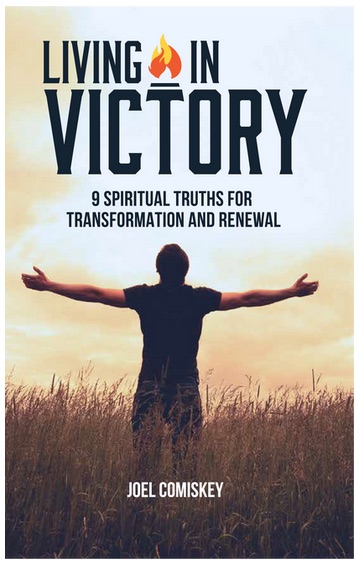
Living in Victory: Book Review

Dr. Joel Comiskey is a missionary, church planter, educator and author whose coaching ministry’s goal is RESOURCING CHURCHES TO MULTIPLY DISCIPLES THROUGH SMALL GROUPS. Here is a volume that can assist church leaders in their personal and ministry: Living in Victory: 9 Spiritual Truths for Transformation and Renewal.

The need for this book is summarized in the introduction: “Many people… Need victory in their Christian lives. They have excepted Jesus, but are not walking in the abundant life that God has for them. God, in fact, once all of us to experience victory in our Christian lives.but the victory of God is not a one time thing. Rather, it’s a journey that leads through good and bad times. More than event; it’s a lifestyle.”

Comiskey’s team has excellent resources on church leadership, especially advocating the advantages of the cell church model.

Here are principles that have been important in his spiritual development:

“In this book, I’ve pinpointed nine principles and priorities that will help a believer live a victorious Christian life. They are:

  • victory in preparing for eternity
  • victory in experiencing God’s love
  • victory in God’s grace
  • victory in God’s sovereignty
  • victory in spending time with Jesus
  • victory in close relationships
  • victory in the local church
  • victory in rest
  • victory in healthy living

These nine priorities will help you understand and apply principles that are simple, biblical, and time-tested to produce spiritual, emotional, and physical benefits. My aim is to stimulate you to live these biblical truths while allowing the Holy Spirit to transform you.”

To get the book, check out his blog, or investigate other resources, visit https://jcgresources.com/

Living Daily in God’s Grace

Wayne Barber’s book, The Rest of Grace, has been published in a second edition with the title Living Daily in God’s Grace. It is available as a free PDF download here.

“For fourteen years, Wayne (1943-2016). served as co-teacher with Kay Arthur at Precept Ministries. During that time, he had the great honor of studying with Dr. Spiros Zodhiates and co-hosted the national radio and TV program, New Testament Light. He was president and founder of Living Grace Ministries. He co-authored the Following God Bible study series published by AMG Ministries and authored several books…” www.waynebarber.org/

Here is an excerpt:

  • “For to me, to live is Christ and to die is gain” (Philippians 1:21).
  • “When Christ, who is our life, is revealed, then you also will be revealed with Him in
    glory” (Colossians 3:4).
    These statements form a foundation for understanding grace as a product of our new birth in
    Christ. He lives in us to enable us to do what He has commanded us to do. Previously I was
    under the law and condemned by it, but now I’m no longer under the law. I’m under grace.
    Christ lives in me. He enables me to do what He has commanded me to do. A believer has to grasp this concept if he is to ever become mature in the Lord. He has to come to the end of himself and start realizing what he can’t do before he can grasp what God can do in and through him. This book isn’t just another step-by-step process that promises instant maturity, but an encouragement for believers to see their relationship with the Lord in a new way.
    The Christ life is not merely trying some new plan for spiritual growth; it is learning to live out
    of His power. It is learning to appropriate the power of God and put it to use for His glory.” p.14

    There are 24 of Dr. Barber’s sermon series on his legacy web site. For example, Romans, Joshua, and Journey of the Christ Life. www.waynebarber.org/

    Identity and Pastoral Ministry

    Identity is a key issue in pastoral ministry. As men, for example, we tend to base our significance and identity on our vocation. When we serve as a missionary, pastor or other vocational Christian minister, it is easy for that role to become our primary identity. The problem with that is that if/when our role changes our identity is affected. One of the perils of retirement is that it can trigger an identity crisis.

    Identity is also important in how we minister the Word. Too often preaching comes across as “doing in order to be” instead of “being in order to do.” Eohesians 2:10 gives the right pattern: “For we are His workmanship, created in Christ Jesus for good works, which God prepared beforehand that we should walk in them” (NKJV).

    Pastor Eric Geiger calls attention to how a grace-based identity is liberating:

    “Attempting to live out our faith without first understanding our identity leads to a legalistic faith. Instead of enjoying the freedom that comes from a vibrant relationship with Christ, many Christians are handcuffed with performance-based Christianity. And the Christian life
    becomes a list of ‘have to’s.’…

    “Sadly, church leaders and pastors (myself included) have perpetuated the problem by neglecting to teach people who they are. Instead we offer pointers to people on what to do or how to live. It is much easier to teach and preach through lists of what people should do. ‘Do these things. Live this way.’

    “While practical and application-oriented teaching is critical, we must be careful not to approach the faith as a way to act ourselves into a new identity. Instead of beginning with identity, we often begin with behavior. The order is wrong. Our identity must be the starting point. When we understand who we are, we are motivated to live the reality of who we are.” [1]

    Consider this list of biblical identity truths. Since they are conditional on being IN CHRIST, they do not cause pride, but rather grateful dependence on our Saviour.

    The Word of God declares that if I am in Christ…

    1. I am God’s child for I am born of the incorruptible seed of the Word Of God which lives and abides forever. 1 Pet. 1:23
    2. I am forgiven of all my sins and washed in the Blood. Eph. 1:7; Heb. 9:14; Col. 1:14; 1 John 2:12, 1:9
    3. I am a new creature. II Cor. 5:17
    4. I am the temple of the Holy Spirit. 1 Cor. 6:19
    5. I am delivered from the power of darkness and translated into God’s kingdom. Col. 1:13
    6. I am redeemed from the curse of the law. 1 Pet. 1:18, 10; Gal. 3:13
    7. I am blessed. Deut. 28:1-14; Gal. 3:9
    8. I am a saint. Rom. 1:7; 1 Cor. 1:2; Phil. 1:1
    9. I am holy and without blame before Him in love. 1 Pet. 1:16; Eph. 1:4; 1 Cor. 1:8
    10. I am elect. Col. 3:12; Rom. 8:33
    11. I am established to the end. 1 Cor. 1:8
    12. I am made near by the Blood of Christ. Eph. 2:13

    When believers in Christ renew their mind with these facts, they base their personal, spiritual, essential identity on God’s revelation.

    Since we are to walk by faith, we must take God’s Word on it! As we do, the Holy Spirit will increasingly direct our conduct to reflect who we really are in Christ.

    May we as disciples and Christian leaders base our essential identity on our being “in Christ” rather than in a leadership role. And may we minister the Word in a way that is supported by affirming the believer’s positive and secure identity in Christ.


    [1] Eric Geiger, Identity: Who You Are in Christ (Nashville: B & H Publishing, 2008), from ch. 1

    For a more complete identity list see https://gracenotebook.com/let-the-real-you-stand-up/

    J.B.W.

    How to Encourage Your Pastor’s Heart

    by Harold Vaughan

    Question: What are specific actions that people do that encourage you?

    A1. Asking how they can pray for me and my wife, and then telling me how they prayed specifically for us.

    A2. Stopping to pray with me in the foyer on a Sunday AM/PM.

    A3. Telling me specifically how the message challenged/convicted them (Not, “That was a good sermon, preacher!).

    A4. Writing thank you notes/cards with specific words of encouragement.

    A5. Initiating a time of fellowship at their home, coffee shop, restaurant, outdoor activity, or dropping by the house.

    Question: What are some general principles for encouraging a pastor?

    A1. Coming up with solutions and not complaints.

    A2. Sharing what they are learning through the message.

    A3. Maturing in personal study and sharing that with their pastor.

    A4. Blessing the pastor’s kids with gifts and notes of encouragement.

    A5. Being spiritually hungry!

    A6. Faithful attendance and participation in services and activities. 

    Question: What do others do that tries your patience?

    A.1 Joking about pay, time off, or time with family.

    A2. Unhelpful opinions.

    A3. Complaints and no solutions.

    A4. Gossip about family.

    A5. Expectations of children to be perfect.

    A6. No spiritual appetite amongst members.

    Question: What are some general things in the church as a whole that encourages you?

    A1. Stability – in the home and church.

    A2. Usability—when we see God using our ministry efforts.

    A3. Encouragers.

    A4. Having our needs met. 

    A5. Refreshment—The absolute need of refreshment that must come from the Lord alone is absolutely vital. The refreshment that comes from getting away… coming apart if you will.

    A6. Faithful men that stand with you.

    A7. God’s blessing. 

    Question: What are some general things in the church as a whole that discourage you?

    A1. The opposite of those things listed above.

    A2. The 1% or 2% of people in the congregation that simply refuse to get things right with God and seek to stir up strife and conflict.

    A3. Family and ministry strife. 

    A4. Physical battles. 

    A5. Unanswered Prayer.

    A6. Unrealized financial expectation.

    Note: Several pastors contributed to this project. I hope you are informed and helped by this article. Let’s encourage our ministers.

    Harold Vaughan 

    ChristLifeMin.org
    Christ Life Ministries
    PO Box 399
    Vinton, VA 24179


    Chaplaincy and Congregational Care


    Pastor, do you ever feel overwhelmed by the responsibilities of pastoral care of the church members and their families? We remember Moses’ workload and the counsel of his father-in-law Jethro:

    “And so it was, on the next day, that Moses sat to judge the people; and the people stood before Moses from morning until evening. So when Moses’ father-in-law saw all that he did for the people, he said, “What is this thing that you are doing for the people? Why do you alone sit, and all the people stand before you from morning until evening?”
    And Moses said to his father-in-law, ‘Because the people come to me to inquire of God. When they have a difficulty, they come to me, and I judge between one and another; and I make known the statutes of God and His laws.’
    So Moses’ father-in-law said to him, ‘The thing that you do is not good. Both you and these people who are with you will surely wear yourselves out. For this thing is too much for you; you are not able to perform it by yourself. Listen now to my voice; I will give you counsel, and God will be with you: Stand before God for the people, so that you may bring the difficulties to God. And you shall teach them the statutes and the laws, and show them the way in which they must walk and the work they must do. Moreover you shall select from all the people able men, such as fear God, men of truth, hating covetousness…'” [and delegate most of the judging to them]. Exodus 18:13-21.

    But how can we delegate a significant portion of this congregational care load? One program that focuses on this need is Stephen Ministries.

    Another option is chaplaincy. Although chaplains usually serve in the community, they can also serve in the area of pastoral care in the church. The International Fellowship of Chaplains addresses this opportunity:

    “Church Chaplains minister within and alongside the local church. As in every community, people struggle with difficulties. Within a church community, people often struggle in silence, hesitating to bother others with their troubles. Chaplains assist the pastoral staff with emotional and spiritual care, crisis, and interventions within the body. This ministry of presence from Chaplains promotes stability of soul, strength of spirit, and quality of well-being for church members.
    What does a Church Chaplain do?
    Chaplains work under the authority of the church pastor(s) to provide assistance in caring for, and serving, members of the congregation. The scope of their work is determined by their church leadership.
    Chaplains meet people where they are and provide comfort and relief at the moment they need it most through emotional and spiritual care when people are traumatized or struggling with grief and loss, depression, thoughts of suicide, or secrecy of domestic violence.
    Chaplains may also visit church or family members in the hospital, nursing home, and under hospice care.”

    Let’s recognize the importance of equipping the saints for the work of ministry (Eph. 4:12), including the ministry of congregational care.

    Here is a chaplaincy brochure and an introductory video from IFOC.org.

    Identity and Ministry

    In my early years was a pastor in Canada I found that my church role was becoming my source of identity. Although being a pastor is a noble ministry, it should not be our essential identity.

    We live in a way that corresponds with our perceived identity…for better or worse. However, even when our identity is positive, if it is based on our circumstances and performance it will be an insecure identity. The Christian life should be lived as “being in order to do.” In other words, our ministry should flow from our grace-based identity. Note the order in Ephesians 2:10 (Amplified translation):

    “For we are His workmanship [His own master work, a work of art], created in Christ Jesus [reborn from above—spiritually transformed, renewed, ready to be used] for good works, which God prepared [for us] beforehand [taking paths which He set], so that we would walk in them [living the good life which He prearranged and made ready for us].”

    Steve Prokopchak has written a helpful book on this subject: Identity: The Distinctiveness of You.

    “…Everyone is searching for security, significance, and identity—it’s a human quest. We gravitate toward finding security and identity in our job, education, relationships, money, talents, or things. These may all miss the mark about who we are created to be. They provide meaning to life but are shortsighted in defining our true identity.

    “You will find a clear process of discovering your destiny through discovering your identity. You will also read about the trap of emotional dependency, the prison of self, sexual brokenness, healing damaged identity, and building identity in the heart of a child.”

    This helpful book is available in print and audio formats. store.dcfi.org/product/identity-the-distinctiveness-of-you/

    Consider doing a study of Ephesians chapters 1-3 and list the many encouraging terms that describe our identity in Christ— an identity that is based on our new spiritual birth.

    J.B.W.

    Here is a video of Steve Prokopchak teaching on this theme.

    Prayer Stations Outreach

    People need to be saved and Jesus Christ is the only answer. The Prayer Station ministry is dedicated to providing an effective way to reach people with the saving knowledge of Jesus Christ using five little words…“May I Pray For You?”

    Learn more about this amazing street evangelism tool and how it could be used of the Lord to make a difference in YOUR community!

    You can download the introductory notebook at
    www.prayerstations.org/pastor